


Top 5 Exercises for Strong Bones
- Hannah King
- Feb 9, 2021
- 2 min read
We're all used to talking about building strong muscles but what about our bone strength?
1/3 women and 1/5 men over the age of 50, break a bone attributable to osteoporosis. It is estimated 200 million worldwide are affected by 'brittle bones' with an osteoporotic fracture occurring every minute in the UK!
Osteoporosis is usually not spotted until a bone is broken so is often referred to as a silent condition. We need to invest in good bone building practices NOW to ensure strong bones for life! After all - prevention is better than the cure, especially when it comes to osteoporosis.
Here are my top 5 training tips for bone health:
1) WEIGHT TRAINING
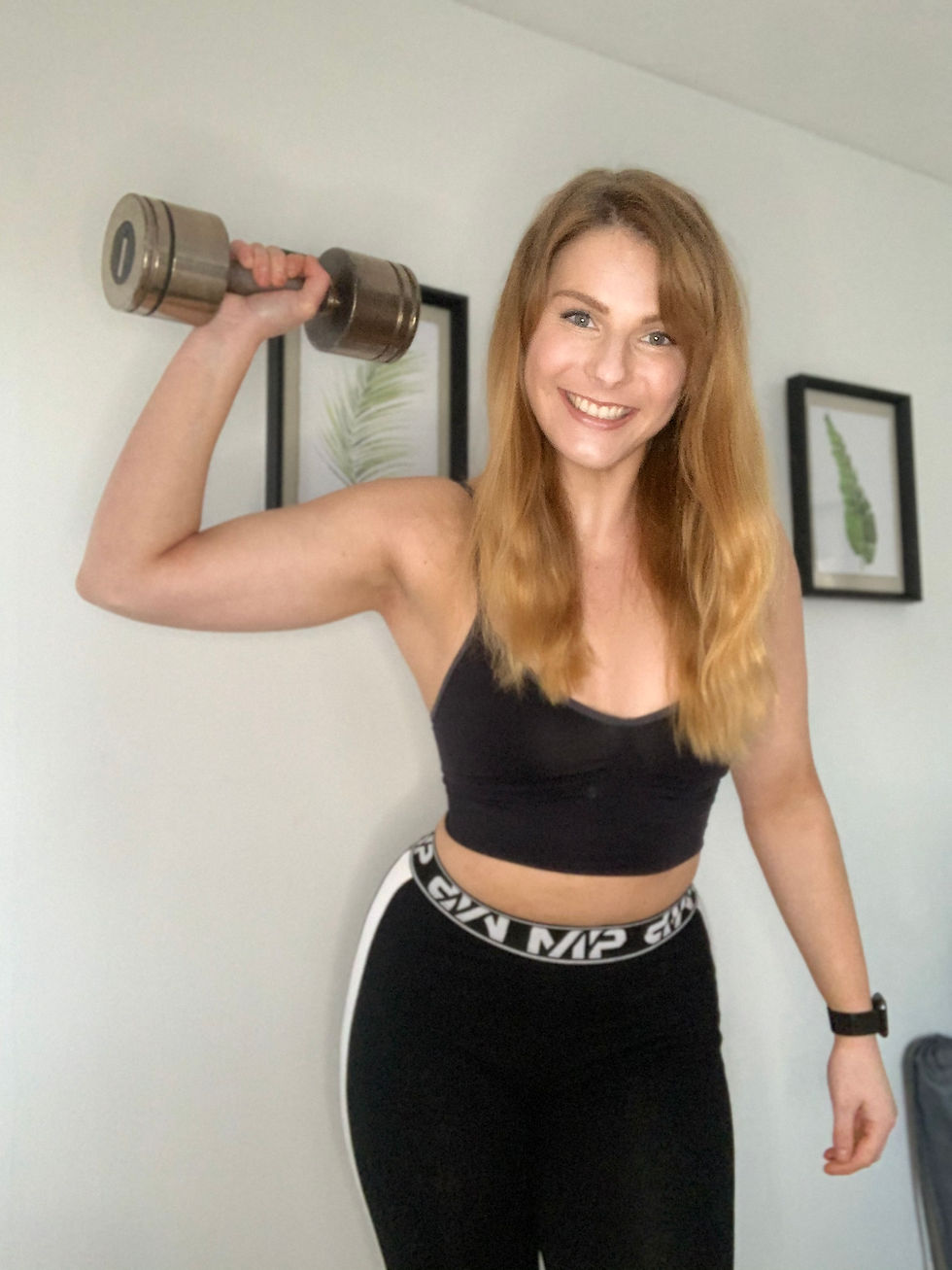
Did you know, what builds muscle also builds bone?! When the muscle you're woking pulls on the bone via the tendon the bone adapts and gets stronger. Building bone is site specific so make sure your working your full body for stronger bones all around.
2) RUNNING
Developing a regular running routine is great for long-term bone health. This is especially noticeable in the hips, legs and spine. Most studies on the effects of running on bone density were longitudinal with no differences being reported until at least 3 years of regular running.
3) HIIT
Gravity is our bone's friend and HIIT focuses on moving your body weight against gravity! Higher impact exercises, such as jumping and skipping during HIIT workouts, have been suggested to have a more significant impact on bone density than lower impact exercises. However studies suggest HIIT style workouts in both forms contribute to long term bone health.
4) SPORT
Sports that involve running, jumping, skipping and being on your feet such as, squash, basketball and dancing all help with bone strength.
5) WALKING
Walking is a great way to maintain your bone density. Brisk walking forces an impactful heel strike and is preferable to cycling or swimming when building bone strength. It is important to make sure you're getting your steps in every day.
These 5 types of exercise may not be suitable for everyone especially those who already have an osteoporosis diagnosis but are usually in osteoporosis prevention.
Have you thought about training for bone strength?
How are you planning on incorporating these types of exercise into your weekly training routine?


Comments